
Rhythm of Devotion:
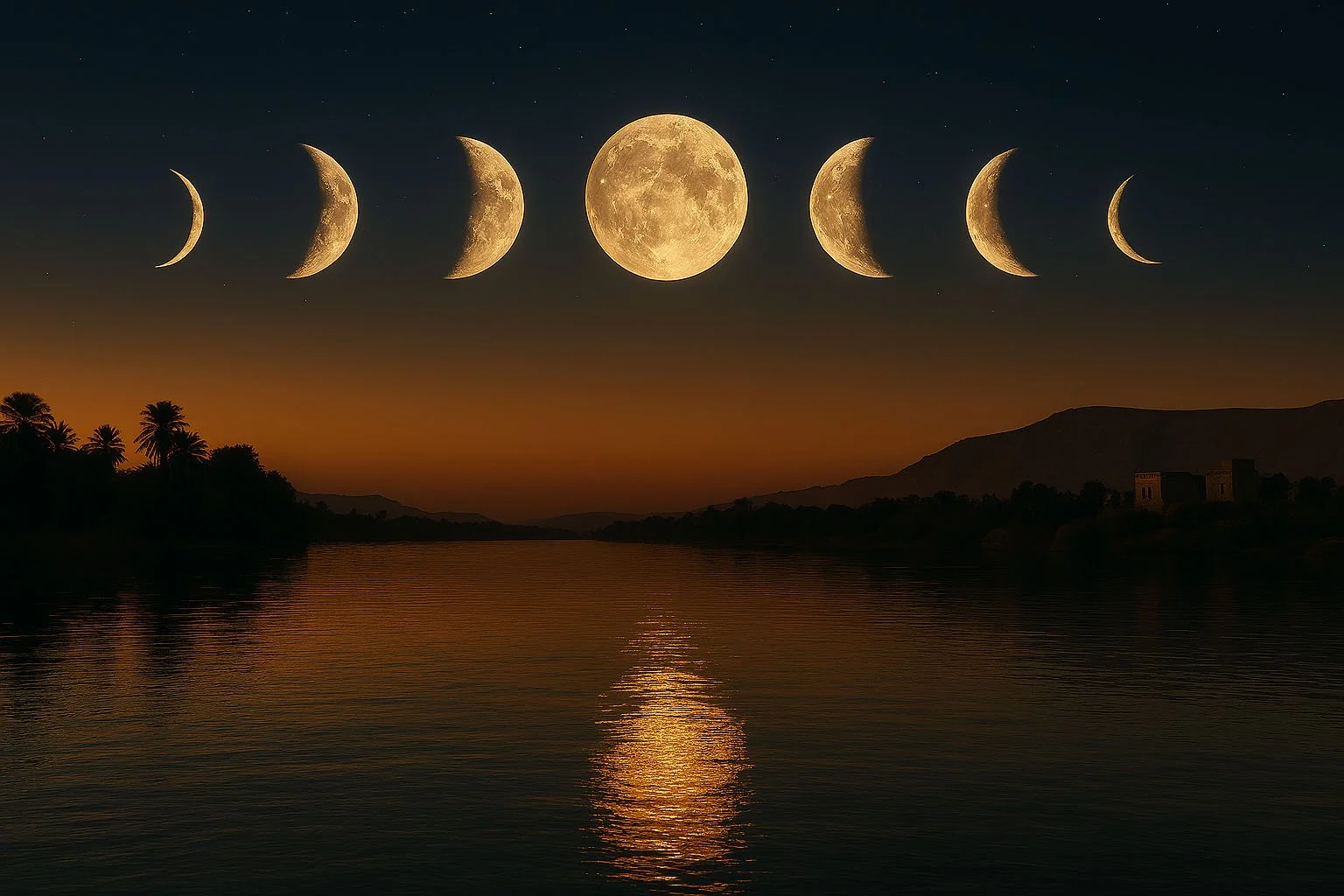
Gatherings at the New and Full Moons
What would it mean for you to join a community that moves with the Goddess month by month, season by season: in study, embodiment, and shared worship?
Joining the Cycle: Ancient Rhythms of Devotion
Each year carries its own rhythm of remembrance. In the ancient Nile Valley, communities honored the Goddess in Her many forms through festivals that marked the seasons. We invite you to step into this rhythm with us, celebrating Her presence as the year unfolds. Our monthly gatherings and annual festivals are open to those who have completed Searching for Sekhmet and the Embodied Symbols workshops. These foundations prepare each devotee to enter ritual with grounding, clarity, and embodied understanding: ready to offer worship not as performance, but as living relationship with the Goddess.
Grounding in History, Living in Practice
Our circle has studied the ancient days dedicated to the Goddess, tracing how people once marked Her power in the turning of the year. These festivals remind us that devotion was woven into daily life, carried in song, procession, and gathering.
From this foundation, we bring together historical research and our own felt experience of the Goddess. The rituals we create are not re‑enactments, but living celebrations, rooted in tradition yet responsive to the needs of our community today.
The Seasons as Sacred Mirror
In the ancient Nile Valley, the year moved through three great seasons: Akhet (Flood), Peret (Growth), and Shemu (Harvest). We use these rhythms as metaphors for our own devotional lives:
Akhet - Flood Season. Are we receiving too much? Too little?
Peret - Growing Season. What are we planting? What are we tending?
Shemu - Harvest Season. What are we consuming now? What are we saving for later?
These questions guide both our monthly gatherings and our festival cycle, helping us align our inner lives with the turning of the year.
Monthly Gatherings
New Moon - Study and Reflection
Each new moon, we gather for a monthly class/workshop. We look at the ancient Egyptian calendar and ask:
What were the people doing in this month?
What rituals, labors, or celebrations shaped their days?
How can these rhythms become metaphors for our own lives?
Thus, these sessions can be a time of deep communal sharing. We speak honestly about where we feel flooded or depleted, what intentions we are planting for the year ahead, and what grew (or failed to grow) in the year behind us. In this circle, we offer one another support, reflection, and witness, tending not only our personal paths but our shared devotional life.
This is a time of learning, reflection, and preparation: a shared doorway into the month’s devotional work.
Full Moon - Ritual and Erotic Devotion
Each full moon, we gather in ritual to dance, move, breathe, and raise erotic energy in worship of the Goddess. This is embodied, ecstatic, communal devotion: a living continuation of the Nubian priestess traditions where the body itself becomes vessel for offering.
In these rites, we hold one another in trust and presence. We witness each person’s unfolding without judgment, supporting the courage it takes to let the body speak its devotion. Erotic energy is not something we perform alone, but something we raise together - a shared current that becomes offering, prayer, and praise.
As our founding priestess teaches: “Our sex is worship. Our orgasm is offering.”
This principle guides our full‑moon rites: pleasure as devotion, embodiment as prayer, ecstasy as a path to honor the Goddess.
✨ If your heart is stirring toward deeper devotion, the next doorway opens into the great festivals of Sekhmet - the sacred cycle that carries Her worship through the turning of the year.
Sekhmet - Pleasure Is Our Prayer, the Body Is Our Altar.